Editor's Picks

While working on a list of synonyms of European White...
Roderick Cameron
|
Aug 24, 2026
Report led by The Morton Arboretum will help prioritize oak...
Website Editor
|
Aug 06, 2026
Motivation
I live in the village of Dolné Dubové...
Jozef Čapkovič
|
Jul 20, 2026
Plant Focus
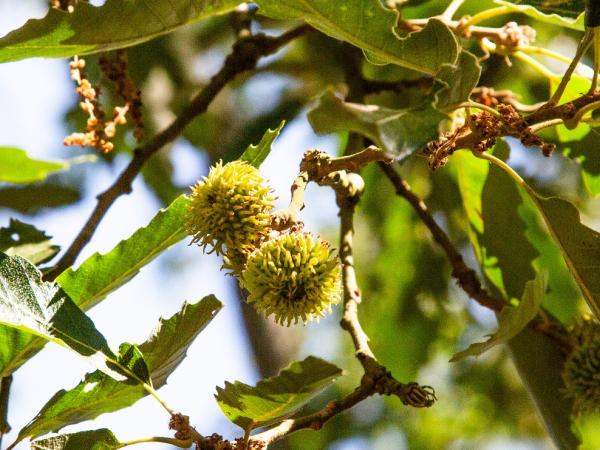
The only oak species endemic to Africa is rare in cultivation. It shouldn't be.
 Full text available for IOS members only. If you are a member, you need to log in.
 To create an account click here; if you have already registered, click here to become a member.
Individual articles can be purchased for U$S 10. If you would like to purchase an article, email a request to website@internationaloaksociety.org
Anna Sisson, Esteban Galeano, Joshua J. Granger, and Ashley Schulz
Published May 2025 in International Oaks No. 36: 69–78
Abstract
Quercus austrina is a threatened species found in the Southeastern US Coastal Plain. Listed as Vulnerable (VU) by IUCN, it is one of 29 oak species of conservation concern identified in a recent conservation gap analysis. Impacts of climate change are reported to be the key threats to Q. austrina. As there are no other studies, to date, on the impacts of climate change-induced stressors on Q. austrina, this study aimed to assess the effects of drought and heat on the growth and vigor of Q. austrina. Acorns were collected from a parent tree near West Point, Mississippi, then grown into 84 seedlings randomly placed into three blocks, each with 28 plants and four treatments (control, drought, heat, drought + heat). The growth and color of the seedlings were assessed at six time-points during summer 2024. Results demonstrated that the seedlings were significantly shorter under drought treatments and were more chlorotic under heat treatments. Though the stressors negatively impacted the seedlings, the results demonstrate adaptations that oaks have to tolerate stress. Research on the stress tolerance of vulnerable oak species offers crucial insights for enhancing forest management and conservation strategies in the face of climate change.
Keywords
Quercus, Latin American oaks, neotropical botany, taxonomy, nomenclature, etymology
References
Abbott, A.G., M.E. Staton, J.M. Lhotka, L.E. DeWald, T. Zhebentyayeva, B. Kapoor, A.M. Thomas, D.A. Larson, D. Hadziabdic, S. DeBolt, C.D. Nelson, and J.E. Carlson. 2024. Will “Tall Oaks from Little Acorns Grow”? White Oak (Quercus alba) Biology in the Anthropocene. Forests 15(2): 269.
Abrams, M.D. 1990. Adaptations and responses to drought in Quercus species of North America. Tree Physiology 7: 227-238.
Almeida, T., G. Pinto, B. Correia, S. Gonçalves, M. Meijón, and M. Escandón. 2020. In-depth analysis of the Quercus suber metabolome under drought stress and recovery reveals potential key metabolic players. Plant Science 299: 110606.
Beckman, E. 2017. Quercus austrina. The IUCN Red List of Threatened Species 2017: e.T194067A2296028. https://dx.doi. org/10.2305/IUCN.UK.2017-2.RLTS.T194067A2296028.en. Accessed on 21 November 2024.
Beckman, E., R. Lance, A. Meyer, and M. Westwood. 2019. Quercus austrina Sarg. In Beckman, E., A. Meyer, G. Man, D. Pivorunas, A. Denvir, D. Gill, K. Shaw, and M. Westwood. Conservation Gap Analysis of Native U.S. Oaks (pp. 68-73). Lisle, IL: The Morton Arboretum. Retrieved from https://www.mortonarb.org/files/species-profile-quercus-austrina.pdf
Carter, L., A. Terando, K. Dow, K. Hiers, K.E. Kunkel, A. Lascurain, D. Marcy, M. Osland, and P. Schramm. 2018. Southeast. In Impacts, Risks, and Adaptation in the United States: Fourth National Climate Assessment, Volume II [Reidmiller, D.R., C.W. Avery, D.R. Easterling, K.E. Kunkel, K.L.M. Lewis, T.K. Maycock, and B.C. Stewart (eds.)]. U.S. Global Change Research Program, Washington, DC, USA, pp. 743–808.
Didion‐Gency, M., A. Gessler, N. Buchmann, J. Gisler, M. Schaub, and C. Grossiord. 2022. Impact of warmer and drier conditions on tree photosynthetic properties and the role of species interactions. New Phytologist 236(2): 547-560.
Fung Au, T., J.T. Maxwell, S.M. Robeson, J. Li, S.M. Siani, K.A. Novick, M.P. Dannenberg, R.P. Phillips, T. Li, Z. Chen, and J. Lenoir. 2022. Younger trees in the upper canopy are more sensitive but also more resilient to drought. Nature Climate Change 12(12): 1168-1174.
Gilman, E.F., D.G. Watson, R.W. Klein, A.K. Koeser, D.R. Hilbert, and D.C. McLean. 2019. Quercus austrina: Bluff Oak. University of Florida Extension Publication #ENH-700.
Guerrero-Sánchez, V.M., M.Á. Castillejo, C. López-Hidalgo, A.M.M. Alconada, J.V. Jorrín-Novo, and M.D. Rey. 2021. Changes in the transcript and protein profiles of Quercus ilex seedlings in response to drought stress. Journal of Proteomics 243: 104263.
Kaproth, M. and J. Cavender-Bares. 2016. Drought tolerance and climatic distributions of the American oaks. International Oaks: Journal of the International Oak Society 27: 49-60.
Kaproth, M., B.W. Fredericksen, A. González‐Rodríguez, A.L. Hipp, and J. Cavender‐Bares. 2023. Drought response strategies are coupled with leaf habit in 35 evergreen and deciduous oak (Quercus) species across a climatic gradient in the Americas. New Phytologist 239(3): 888-904.
Keller, S.Q., D. McCauley, R.A. Sheridan, C. Scagel, and L. Nackley. 2024. Comparing drought responses of red oak (Quercus rubra) and red maple (Acer rubrum) in field-grown nursery production. Journal of the American Society for Horticultural Science 149(5): 302-309.
Kotlarz, J., S.A. Nasiłowska, K. Rotchimmel, K. Kubiak, and M. Kacprzak. 2018. Species diversity of oak stands and its significance for drought resistance. Forests 9(3): 126.
Lance, R. 2022. Revisiting the taxonomic and nomenclatural problems of the Quercus sinuata Walter complex. International Oaks: Journal of the International Oak Society 33: 27-44.
Liu, X., Q. Li, X. Sun, S. Yi, P. Wu, and N. Wang. 2024. Nutrition addition alleviates negative drought effects on Quercus acutissima seedlings. Forest Ecology and Management 562: 121980.
Mazis, A., S.D. Choudhury, P.B. Morgan, V. Stoerger, J. Hiller, Y. Ge, and T. Awada. 2020. Application of high-throughput plant phenotyping for assessing biophysical traits and drought response in two oak species under controlled environment. Forest Ecology and Management 465: 118101.
Overpeck, J.T. 2013. The challenge of hot drought. Nature 503: 350–351.
R Core Team. 2023. R: A language and environment for statistical computing. R Foundation for Statistical Computing, Vienna, Austria.
Sebastiana, M., A.B. da Silva, A.R. Matos, A. Alcântara, S. Silvestre, and R. Malhó. 2018. Ectomycorrhizal inoculation with Pisolithus tinctorius reduces stress induced by drought in cork oak. Mycorrhiza 28: 247-258.
Stein, J.D., D. Binion, and R.E. Acciavatti. 2003. Field Guide to Native Oak Species of Eastern North America. U.S. Forest Service, Forest Health Technology Enterprise Team. 161 p.
Tilman D. 1988. Plant strategies and the dynamics and structure of plant communities (MPB-26), vol. 26. Princeton, NJ, USA: Princeton University Press.
USDA Natural Resources Conservation Service. 2024. Web Soil Survey. Available online at the following link: http://websoilsurvey. nrcs.usda.gov/. Accessed 21 November 2024.
Wahid, A., S. Gelani, M. Ashraf, and M.R. Foolad. 2007. Heat tolerance in plants: an overview. Environmental and Experimental Botany 61(3): 199-223.
WFO. 2024. Quercus austrina Small. The World Flora Online. Available via http://www.worldfloraonline.org/taxon/wfo- 0000289675. Accessed on: 21 Nov 2024
Zhao, K., P. Villar-Salvador, and G. Li. 2024. Legacy effects of early cotyledon removal on the growth, carbon and nitrogen storage, and drought response of Quercus variabilis seedlings. Forest Ecology and Management 561: 121923.
The International Oak Society acknowledges the generous support of the following institutions:
Supporting Institutional Members




Standard Institutional Members